
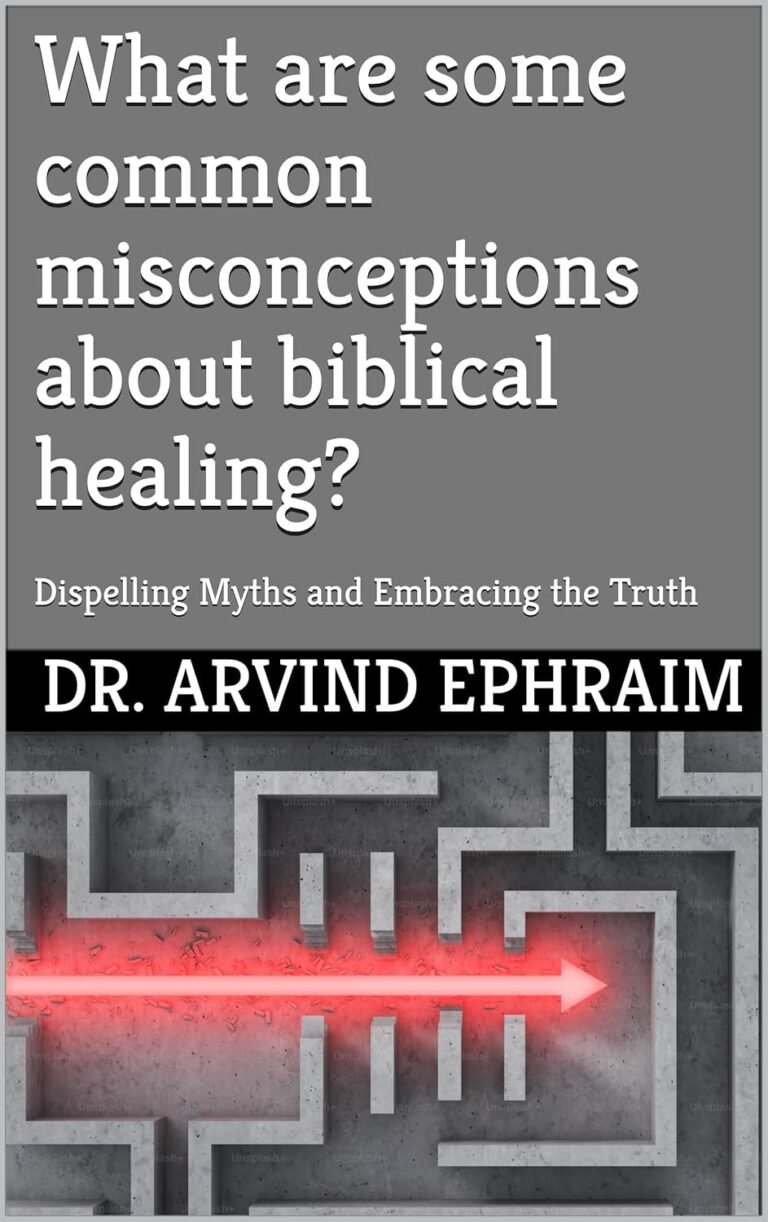
What Are Some Common Misconceptions About Biblical Healing? is a biblically grounded and clarity-bringing exploration of the misunderstandings that often surround God’s healing power. Healing is woven throughout Scripture as an expression of God’s compassion, authority, and desire to restore His people—yet many believers struggle with confusion due to long-held myths and incomplete teachings.
This book examines healing through the lens of the Bible, focusing on the ministry of Jesus, the apostles, and God’s promises of physical, emotional, and spiritual restoration. Dr. Arvind Ephraim guides readers to move beyond assumptions and tradition, helping them embrace a fuller, more accurate understanding of biblical healing.
Rather than creating debate, this book seeks to bring balance, faith, and peace by aligning healing theology with God’s character and His Word.
Many believers carry misconceptions that shape how they view sickness, healing, and God’s role in suffering. One common belief is that God uses sickness to discipline or test His children. While Scripture speaks of discipline and trials, it also makes clear that God does not tempt His people with evil or delight in affliction.
Another widespread misconception is that sickness is always the result of personal sin. Although the Bible acknowledges that sin can have consequences, it also presents many examples where suffering is not connected to individual wrongdoing. Jesus Himself corrected this misunderstanding, emphasizing God’s greater purposes rather than blame.
There is also confusion surrounding the scope of healing. Some limit healing to the physical body, overlooking the Bible’s emphasis on emotional, mental, and spiritual restoration. Others expect healing to occur in only one specific way, failing to recognize the diverse methods God uses to restore His people.
Perhaps one of the most damaging misconceptions is the belief that a lack of healing always indicates a lack of faith. This view often produces guilt, discouragement, and doubt, ignoring God’s sovereignty, timing, and greater redemptive plan.
This book addresses these challenges by carefully examining Scripture and biblical narratives. Each misconception is evaluated in the light of God’s Word, revealing truth without condemnation. The approach is pastoral, balanced, and faith-strengthening, helping readers separate human assumptions from biblical reality.
After reading What Are Some Common Misconceptions About Biblical Healing?, readers will gain clarity and confidence in their understanding of healing. They will be able to recognize and reject harmful myths while embracing the truth of God’s healing nature and purposes.
Readers will develop a healthier perspective on sickness, suffering, faith, and restoration. This book helps remove fear, guilt, and confusion, replacing them with trust in God’s character and peace in His promises.
Ultimately, this book strengthens faith by grounding healing in Scripture rather than assumption. It empowers believers to walk forward with confidence, knowing that God’s healing work—whether immediate or progressive—is always rooted in love, wisdom, and grace.